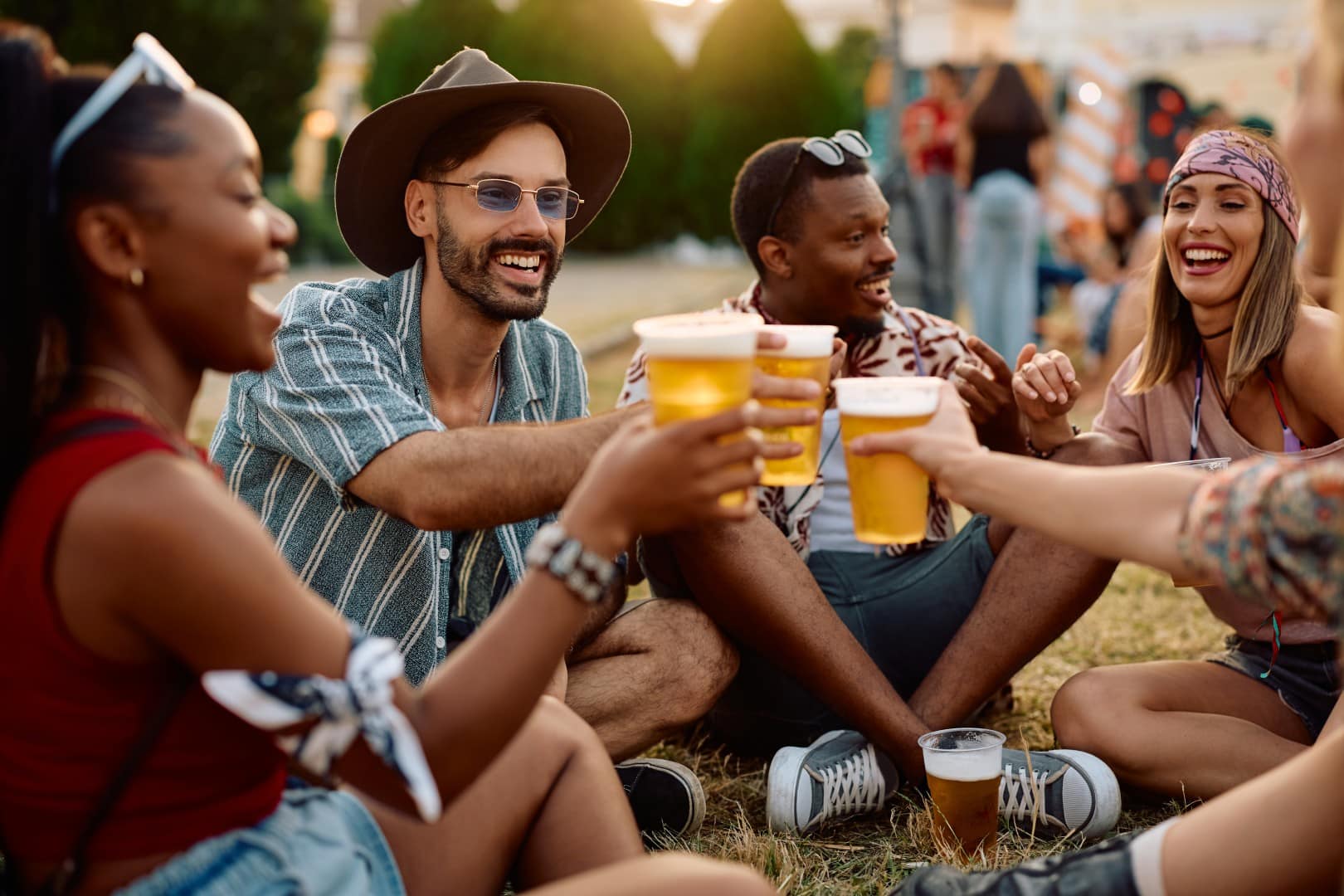
Each fall, typically in late September or early October, the Great American Beer Festival in Denver takes over the city’s calendar. It is the largest ticketed beer festival in the country, a weekend centered entirely on craft beer. Breweries come in from every region for it.
The Great American Beer Festival’s history stretches back to 1982. The event started that year in Boulder, Colorado, where 24 breweries served 47 beers. It moved to Denver soon after and has called the city home ever since. In the decades since, 2019 stands as the festival’s biggest year on record:
That same year, 322 judges from 18 countries picked the winners.
For most of the past three decades, GABF filled exhibit halls inside the Colorado Convention Center. The 2.2-million-square-foot building let the festival pack hundreds of pouring stations under one roof. However, starting in 2026, the festival moves outdoors for the first time, to Levitt Pavilion at Ruby Hill Park.
The Brewers Association describes the shift as a chance to reimagine the event, not just relocate it. The park covers 88 acres and looks out over the Denver skyline. A hillside amphitheater sits there, surrounded by open green space. That setup gives GABF room for live music and open-air tasting zones that indoor exhibit halls never had. PAIRED, the festival’s food and beer pairing event, runs alongside the main sessions. In winter, the same grounds host Ruby Hill Terrain Park. It was the first free ski and snowboard terrain park to open inside a US downtown.
Despite the new venue, GABF’s format holds constant from year to year, even as the exact dates move. The festival lineup covers multiple afternoon sessions each year. In 2026, both sessions fall on October 10 and 11, running from noon to 4pm. General admission Great American Beer Festival tickets typically start around $60, with sales opening each June.
A handful of rules apply at every session:
Getting to Ruby Hill Park works differently than the previous downtown venue did. Shuttles run every 15 to 30 minutes from the Sheraton Denver Downtown. Two light rail stops, I-25 & Broadway and Evans Station, serve the venue directly. Parking near the park is limited and first come, first served.
Denver’s beer culture operates every month of the year, well beyond the festival weekend. The city counts more than 150 breweries citywide. A dense cluster sits inside the RiNo Art District, a stretch of converted warehouses and mural-covered walls northeast of downtown. A few stops anchor the walk:
Groups who want to see several of these stops in one outing frequently arrange a guided route through these taprooms. That way, nobody spends the afternoon hunting for parking near Brighton Boulevard.
Some visitors extend the outing to Golden, about 15 miles west of Denver. The original Coors Brewery still conducts public tours through its production floor there. Cannonball Creek Brewing Company sits a short distance from the Coors facility. It draws its own following for hop-forward beer, giving the town two distinct stops within walking distance of each other.
Since 1982, GABF has changed more than once, and Ruby Hill Park will not be the final version of it. One thing has not changed. Hundreds of breweries still pour in one place, for one weekend, judged side by side. That is the reason people build a fall trip around it.